Brain Thoughts with Joselyn
I’m what feels like a year too late to the conversation, but let’s talk about it.
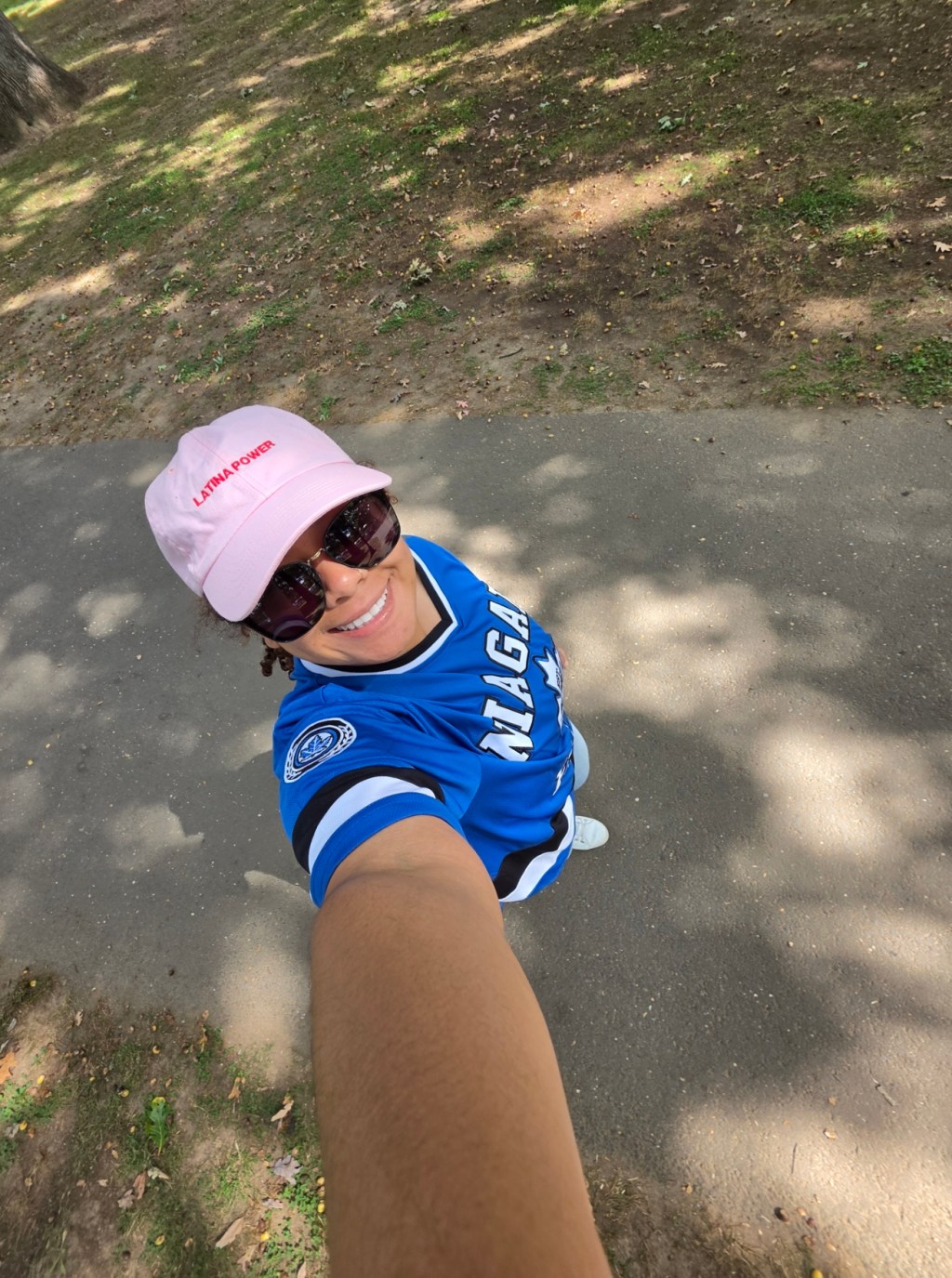
If you search the phrase “Latina Power,” the internet will tell you it’s a cultural and economic movement that celebrates Latina women’s impact in the world. The phrase has long been used to honor the achievements, resilience, and influence of Latinas in American society (BoldLatina). It became more widely known this past July, when clips from a congressional hearing began circulating on social media. In that hearing, Dr. Anthea M. Hartig, director of the Smithsonian’s National Museum of American History, was questioned by Rep. Brandon Gill (R-Texas) about whether a government-funded institution should be selling merchandise, including hats, with the phrase “Latina Power” (ABC News, BoldLatina).
So why did it blow up the way it did, and why does it matter?
Well, some people will want to compare the phrase to the infamous “White Power,” and let’s be honest, that’s the first comparison that comes to mind. But does it really hold up? There’s also “Black Power,” a movement that changed this nation and the world. It raised the voices of Black communities around the globe, and decades later, social media gave that energy a new platform. In July 2013, activists first used the #BlackLivesMatter hashtag to spark conversation about racism, violence, and the criminal justice system, and Pew Research Center now describes the movement as one of the most prominent to develop and evolve entirely within the social media era (Pew Research Center, 2023). By the summer of 2020, with so many of us spending more time online during the pandemic, the movement reached its largest moment. More than half of all existing #BlackLivesMatter tweets were posted between May and September of that year, following the murder of George Floyd (Pew Research Center, 2020). The word power was reclaimed by communities who used it to stand for something other than evil: good, solidarity, strength, community, love, and the right to exist in a world that wants to hide us.
So why was the colonizer (I kid, but not really) upset? Personally, I’d say it comes down to two things:
- 1. Women’s role in society (the other)
- 2. Latinx and immigrant communities were under attack
The idea that women should stay quiet and not speak up has been pushed by some politicians who want a homogenous society. That’s a lot to ask, especially when Census data shows a more multiracial and multiethnic population across the US (Census 2023 Population Projections, Census 2020 Race and Ethnicity Report).
But why did the Latina Power movement become as strong and viral as it did? To answer that, I first need to ask: Have you met a Latina?
If you’ve ever had the pleasure of interacting with one, you know the power she holds is beyond anything you’d imagine. Latinas are kind, caring, and soft. We can be teddy bears and even gentle at times. But we are also strong, because life and our families placed us as role models against our will. To have met and loved a Latina is a blessing.
We’ve been put in charge of the care of everyone around us, and we’re constantly discouraged from speaking up because we dream too big and our tongues are too sharp.
I saw a friend’s post once about how she was always in trouble as a child because of her “smart mouth.” But isn’t having a smart mouth a good thing? We are told as children to ask why, to dream big, to never give up. But the minute a Latina daughter dares to ask, to dream big, or to speak up, she is “acting up.”
So yeah, no wonder that phrase went viral! Latinas, especially eldest-first-daughter Latinas, are no joke. We’ve seen it all and heard it all, and we haven’t let it slow us down. We keep moving mountains and opening doors for others, especially our younger siblings.
At the end of the day, becoming Latina is a rite of passage many of us go through. It’s not always a fair rite, but it’s one all of us go through. Being a strong Latina is a given. No matter where in the world we stand, Latina Power is more than a phrase. It’s an identity stamped across our foreheads by our parents and tías whenever we feel like we’re falling apart, reminding us “dale con ganas, mija, que sí se puede.”
So yeah, Latina Power is an identity more than a movement, and no amount of closing DEI programs across the country can erase it.
Sources
- ABC News, “‘The museum does not take sides’: Smithsonian official defends institution amid Trump criticism” (July 21, 2026): abcnews.com
- BoldLatina, “Why a ‘Latina Power’ Hat Sparked a Congressional Debate About the Smithsonian” (July 22, 2026): boldlatina.com
- Pew Research Center, “#BlackLivesMatter Turns 10” (June 29, 2023): pewresearch.org
- Pew Research Center, “#BlackLivesMatter surges on Twitter after George Floyd’s death” (June 10, 2020): pewresearch.org
- U.S. Census Bureau, “2023 National Population Projections Tables: Alternative Scenarios”: census.gov
- U.S. Census Bureau, “Improved Race and Ethnicity Measures Reveal U.S. Population Is Much More Multiracial” (August 2021): census.gov



Leave a Reply